Prevent Timber Decay: Homeowner Checks and Warning Signs
Prevent Timber Decay: Homeowner Checks and Warning Signs
Timber plays an important part in many homes, from floor joists and roof timbers to skirting boards, door frames and fitted cupboards. When wood is exposed to persistent moisture, however, it can begin to deteriorate. Regularly checking for leaks, poor ventilation and changes in the condition of timber can help homeowners spot potential problems before they become more extensive.

Timber damage does not always mean dry rot is present. Water staining, general wear, wet rot and wood-boring insects can cause different symptoms. If you notice a combination of damp conditions and damaged wood, it is sensible to investigate the cause rather than simply covering or replacing the visible area.
Prevent Timber Decay by Checking for Leaks and Water Ingress
Start with the common sources of unwanted moisture. Check beneath sinks, around washing machines, near bathrooms and around visible pipework for signs of leaks. Look for water marks on ceilings and walls, particularly below bathrooms or roof spaces.
Outside, keep an eye on gutters, downpipes, roof coverings and the pointing around openings. Water entering through a small defect may go unnoticed until nearby timber begins to deteriorate. If a window or door seems to be letting in water or draughts, this guide to window and door repairs may also be useful. Fixing the source of moisture is an important part of protecting the building fabric.
Look for Changes in Timber
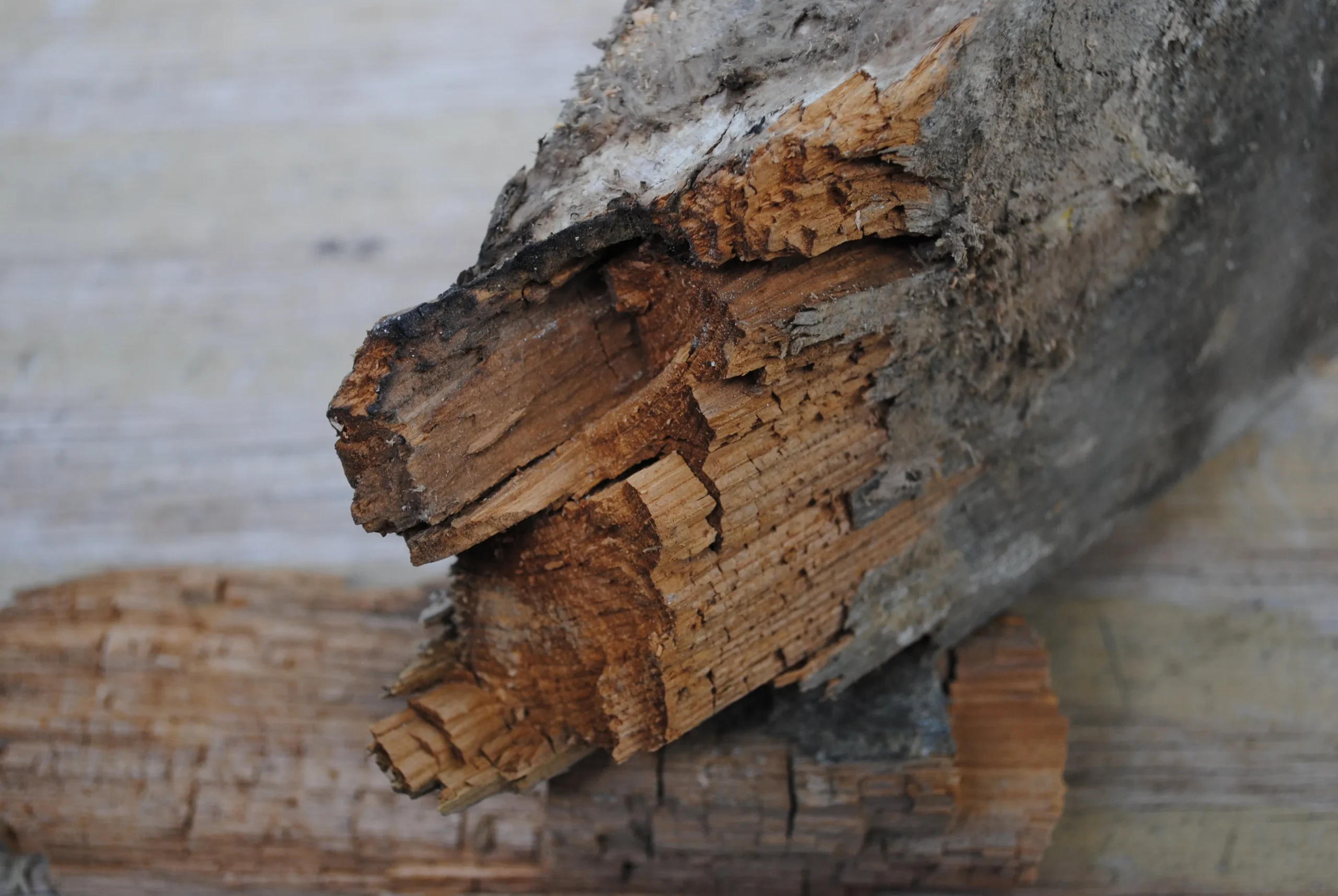
During routine home maintenance, pay attention to floorboards, skirting boards, door frames and accessible roof timbers. Warning signs can include unusual cracking, soft or crumbly wood, distortion, discolouration or fungal growth. A persistent musty smell may also warrant further investigation, particularly when it occurs alongside visible damage.
These clues are not a diagnosis on their own. For a closer look at common warning signs, read this guide from Dry Rot Essex on what dry rot looks like.
Do Not Ignore Hidden or Enclosed Areas
Moisture and timber decay can develop in places that are not immediately visible, such as beneath floorboards, behind skirting boards, around boxed-in pipes or near poorly ventilated roof spaces. If a leak has occurred, check the surrounding area after the repair to make sure it has dried properly and that no further damage is apparent.
Avoid lifting heavy materials or disturbing potentially weakened structural timber if you are unsure of its condition. Where the damage appears extensive or affects a floor or supporting timber, seek a suitable professional assessment.
Improve Ventilation Where Appropriate
Bathrooms, kitchens, lofts and other areas with limited airflow can retain moisture. Use suitable extractor fans, allow damp rooms to dry after use and avoid blocking ventilation openings. The right measures depend on the building, so do not seal vents or make changes that could worsen condensation or airflow.
Dry Rot and Wet Rot Are Different Problems
Dry rot and wet rot are both forms of fungal timber decay, but they can behave differently and may need different remedial approaches. Other issues, including woodworm and water damage, can also affect timber. It is best to establish the likely cause before deciding what treatment is needed.
You can read more in the guide to dry rot and the article explaining the differences between dry rot and wet rot.
When Should You Arrange an Inspection?
Consider getting advice if damage is spreading, timber feels weak, fungal growth is visible, a musty smell persists or the source of moisture is unclear. An inspection can help identify affected areas, investigate possible moisture sources and determine whether repairs or treatment may be appropriate.
For homeowners in Essex, Dry Rot Essex provides information about timber decay and related property concerns. You can also check its areas covered across Essex or use the contact page to discuss a concern.
The company’s listed service areas include Chelmsford, Colchester, Brentwood, Billericay, Maldon, Witham and Southend-on-Sea, alongside other towns across Essex.
A Simple Timber Maintenance Routine
- Check under sinks and around appliances for leaks.
- Look for water marks after heavy rain or plumbing issues.
- Inspect accessible timber for changes in texture, shape or colour.
- Keep ventilation paths clear and use extraction in moisture-prone rooms.
- Investigate persistent damp smells rather than masking them.
- Arrange an assessment if timber appears weakened or damage is spreading.
Routine checks cannot guarantee that timber decay will never occur, but they can help you notice warning signs sooner. The key is to address moisture problems and get damaged timber assessed before choosing a remedy.
Frequently Asked Questions
Does damp timber always mean dry rot?
No. Damp timber can be affected by wet rot, water damage or other issues. A proper assessment is needed to establish the likely cause.
Can I treat timber decay by drying the area?
Reducing moisture is important, but drying alone may not resolve existing fungal decay or repair timber that has lost strength. The damage and its cause should be assessed.
What should I do if I find fungal growth?
Avoid assuming its identity based on appearance alone. Take note of where it is growing and whether nearby timber is damp or damaged, then seek professional advice if you are concerned.